04
UI Screens — Mobile
 some sets complete.webp)
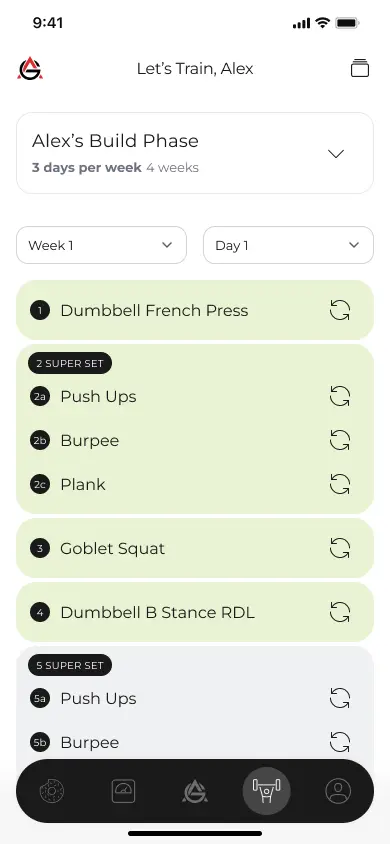
AG Coaching · Digital Content Marketplace
Alex Gamble Coaching had a proven 1:1 training and nutrition business generating revenue, but an unstable app. Heavily manual onboarding processes and a WhatsApp communication channel being flagged as spam were limiting service delivery and capping growth. With coaches at capacity and no way to scale without adding headcount, the business needed a platform that could do more of the operational work.
Rebuilding the app to automate onboarding, stabilise the crash rates and reduce bugs, while increasing coach capacity by 8.3% — adding 50 revenue-generating client spots without increasing headcount.
Reduce manual admin burden and replace WhatsApp as the coaching communication channel — without disrupting an active, paying client base.
A labour-intensive operation left growth dependent on headcount — compounded by an unstable app and a disrupted communication channel, operational blockers were limiting the business's ability to scale and deliver.
Before designing anything, I mapped the existing end-to-end workflow across every actor in the system. The swim lane diagram revealed where time was being lost, where tools were creating friction, and where the business was most exposed.
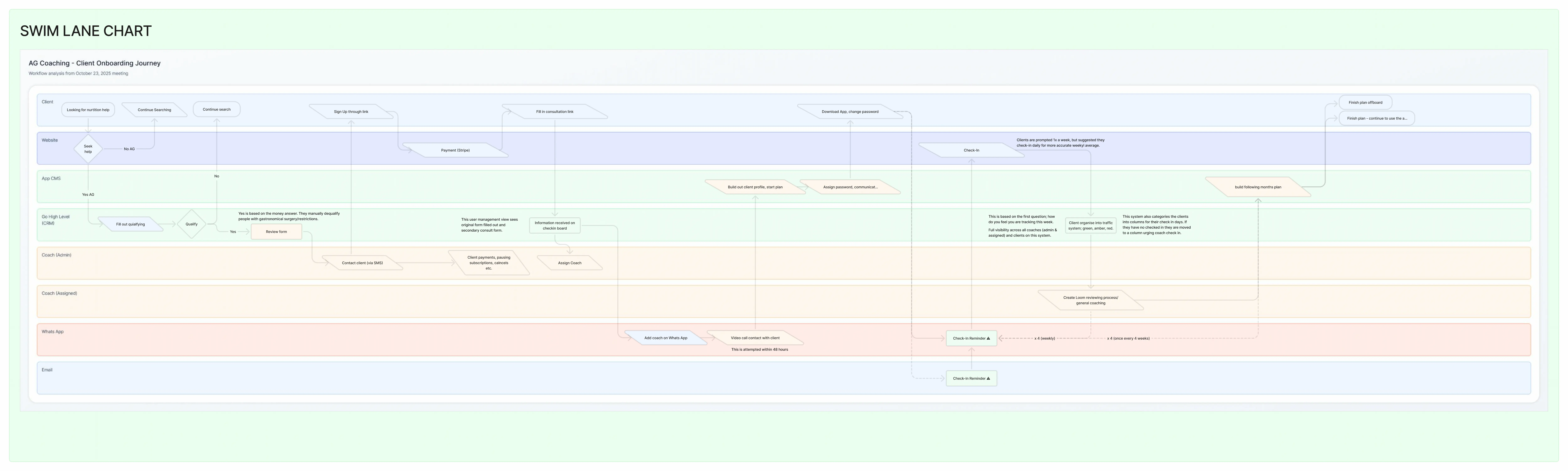
Meal plan creation was taking 1 hour per client each month. With coaches managing up to 60 clients each, this was a significant and unsustainable time cost.
Check-ins were managed via WhatsApp. As the business grew, message volume triggered spam restrictions — directly threatening client experience and business revenue.
Client onboarding was entirely manual — the admin team was building every profile from qualifying the lead to setting up member only access to the app and assigning a coach.
Nutrition calculation was entirely manual, not dynamic.
Coaches were experiencing task fatigue, unable to manage client check-ins effectively.
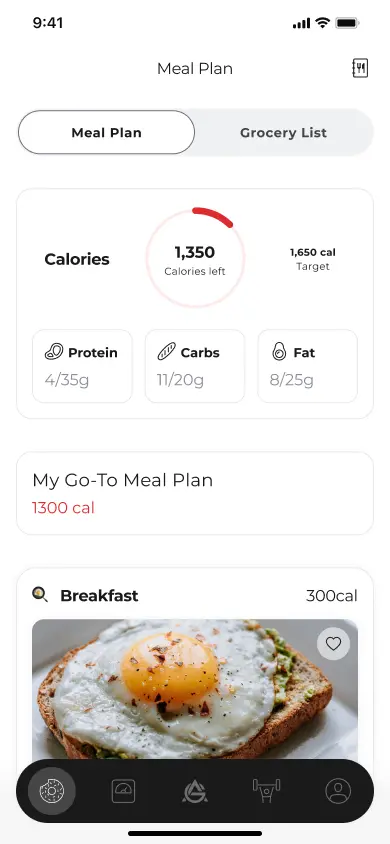
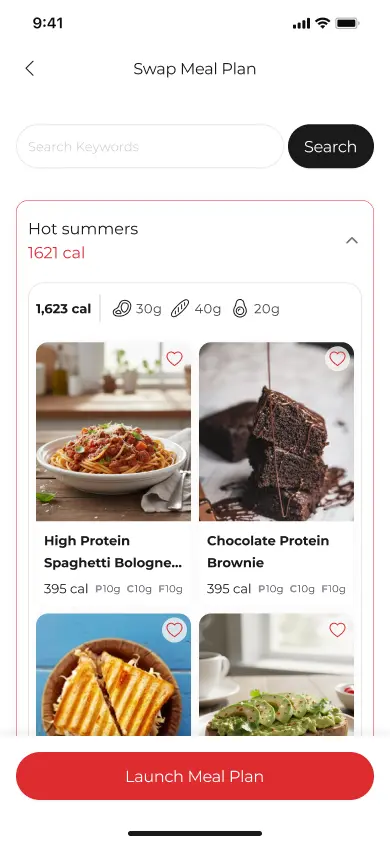
AG Coaching's nutritional methodology is specific to Alex's coaching philosophy. Rather than applying a generic calorie calculator, the system needed to reflect his approach — and be flexible enough to accommodate different coaches applying it differently to individual clients.
The dynamic personalisation system works through the same layered logic as The Recipe Hub — BMR calculation, TDEE activity multiplier, goal-based calorie target, and macro split allocation — adapted specifically to Alex's methodology and the 1:1 coaching context.
The key difference here is coach override. In a 1:1 coaching environment, coaches need the ability to manually adjust a client's targets based on real-world progress and individual response. The system generates a starting point automatically — reducing the hour-long manual calculation process — but keeps the coach in control of the final plan.
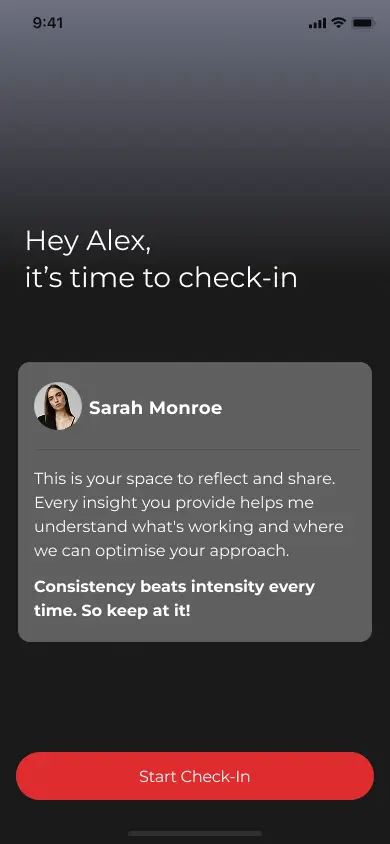
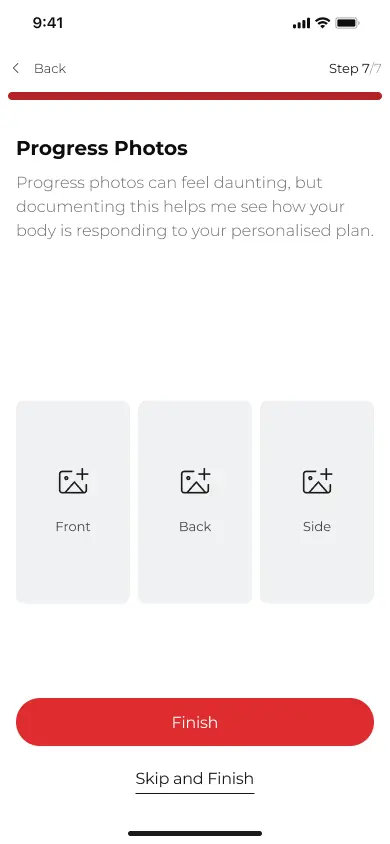
Replacing WhatsApp with an in-app check-in experience was the most operationally critical design problem on this project. The check-in flow prompts clients weekly — and daily for those who want more granular tracking. The first question determines the coaching response path.
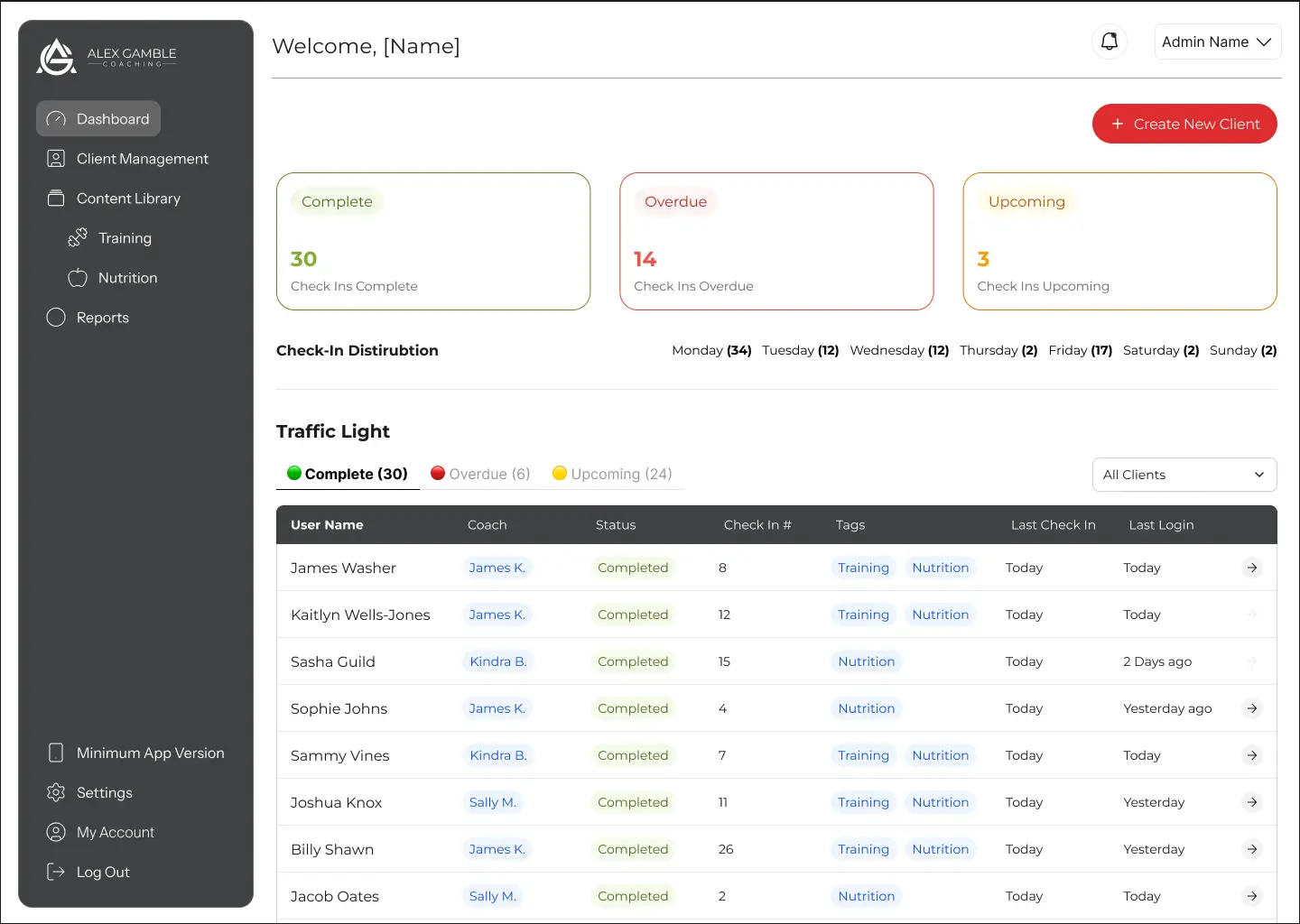
Coaches see full visibility of all their clients' check-in status in real time. The traffic light system categorises clients by check-in compliance and progress signals, giving coaches an immediate view of who needs attention and who is on track. Clients who have not checked in are automatically surfaced in a separate column — removing the need for coaches to manually track who they've heard from across a 60-client roster.
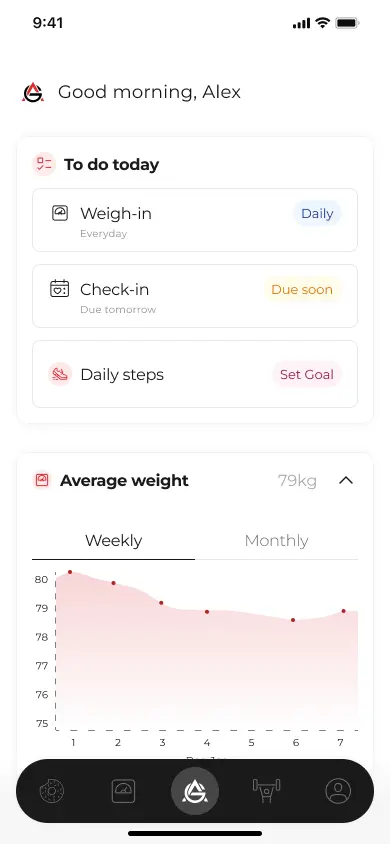
The weigh-in component runs alongside check-ins, capturing weekly weight data that feeds into progress tracking. Weekly averages smooth out daily fluctuation and give both coach and client a clearer picture of trajectory.
Client has checked in. Progress is aligned with their goal and pace. Light-touch response — coach acknowledges and encourages.
Client has checked in but signals are mixed — progress stalling, mood flagged, or compliance dropping. Deeper coaching intervention prompted.
Client has not checked in. Automatically surfaced in a separate column. Coach-initiated contact prompted — no manual tracking required.
Role-scoped CMS views reduced coach task fatigue and freed business owners from operational oversight. The structured view conditioned the business to scale in a way each role has only the visibility it needs to perform without friction, duplication, or dependency on others.
The spam restriction issue was an active revenue threat. Getting check-ins in-app was not a nice-to-have — it was the most business-critical decision on the project.
Automating macro targets was the efficiency gain. Keeping coach override was the quality guarantee. 1:1 coaching derives its value from human judgement — the platform supports that, not replaces it.
A notification-based system would have added noise. A visual task management system gives coaches a single dashboard view of everything that needs their attention — faster to process, easier to act on.
This project is the clearest example in my portfolio of design directly serving a business outcome. The ~35% reduction in meal plan creation time and ~30% reduction in onboarding time are not design metrics — they are commercial ones. Coaches can now take on more clients. The business can grow without growing its administration burden proportionally.
The discovery process on this project was particularly satisfying. The swim lane diagram and pain point analysis gave the entire engagement a shared language and a clear set of priorities before a single screen was designed. That upfront investment in understanding the system — not just the product — is what made the design decisions defensible and the trade-offs easier to make.
The WhatsApp problem is a good reminder that sometimes the most important design problem isn't the one the client comes in asking to solve. Replacing an external communication channel with an in-app experience removed an active revenue threat and unlocked the scalability the business was aiming for.