UI Screens — Tablet
Coach Pilot · SaaS
Coach Pilot is an AI-native sales coaching platform built around customised playbooks, with a live meeting bot as its core value proposition. The client had a revenue-generating POC with paying customers — built fast through vibe coding. It validated the market, but was never built to scale or meet security requirements.
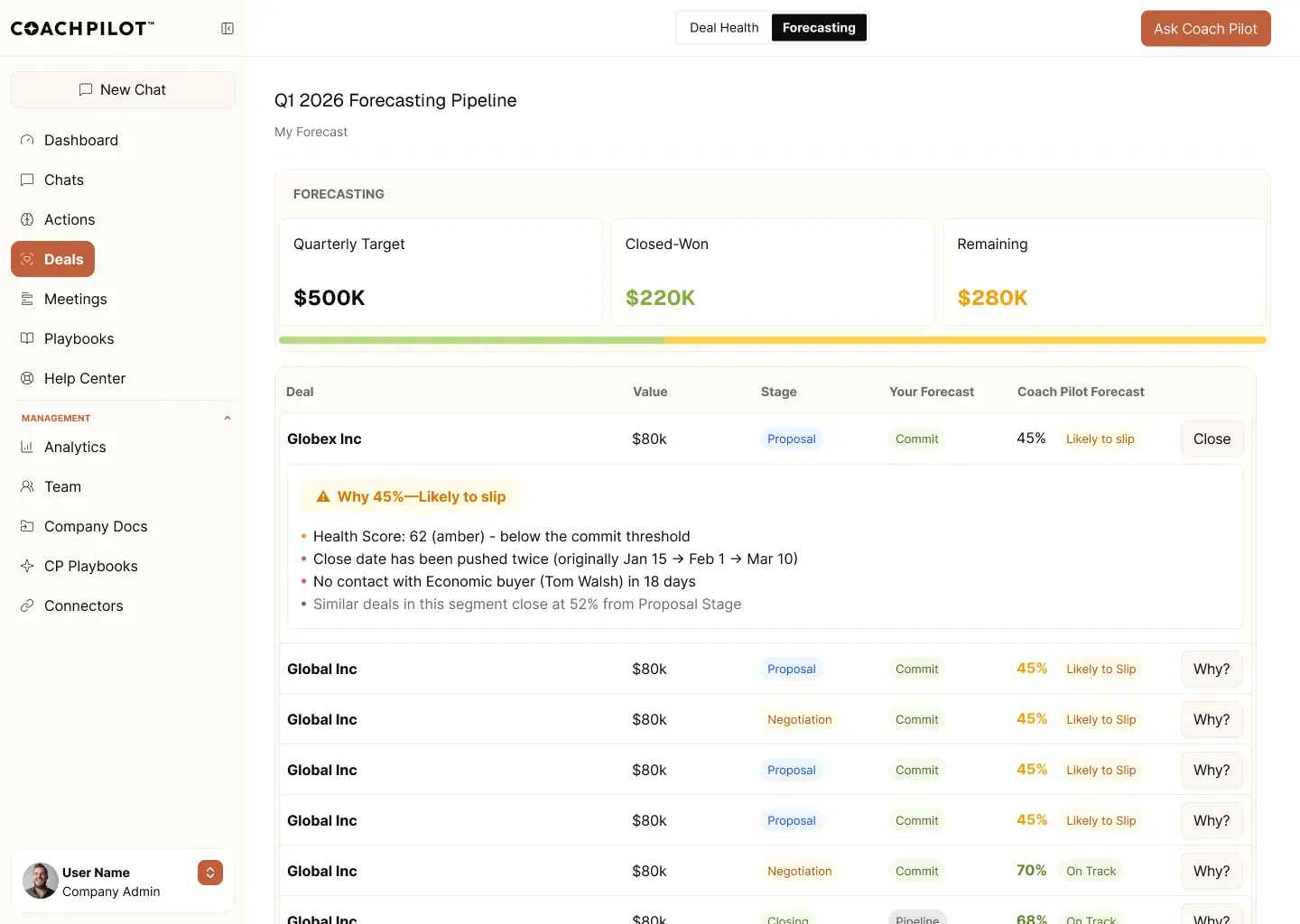
Rebuild the platform with use-case-specific UX — bringing role clarity to permissions and access, and expanding the business overview for owners and managers.
Getting the new platform to market at pace — the client was accustomed to vibe coding's immediate thought-to-execution speed. The redesign had to move fast while retaining existing customers, unlocking enterprise adoption, and laying the groundwork for the roadmap ahead.
A proven POC had validated the concept — but vibe-coded foundations were never built to scale trust. Fragmented integrations between the platform and live coaching tools created a disjointed experience, while gaps in security architecture made enterprise adoption a hard sell.
The AI coaching potential was real, but the codebase was shaped by sales momentum rather than engineering rigour. Loosely integrated tools and insufficient security architecture had become a liability — one that capped ROI and blocked the enterprise deals that mattered most.
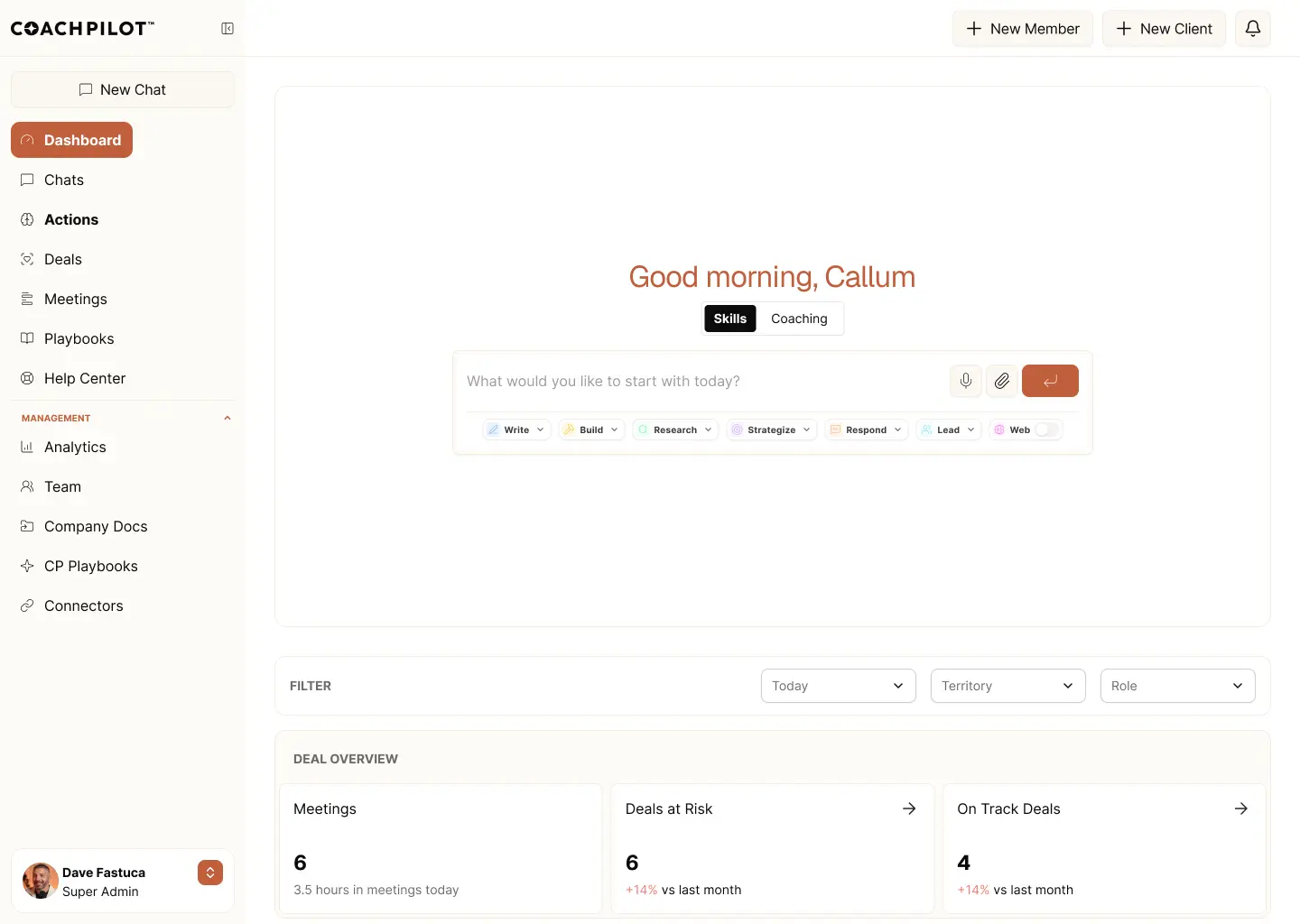
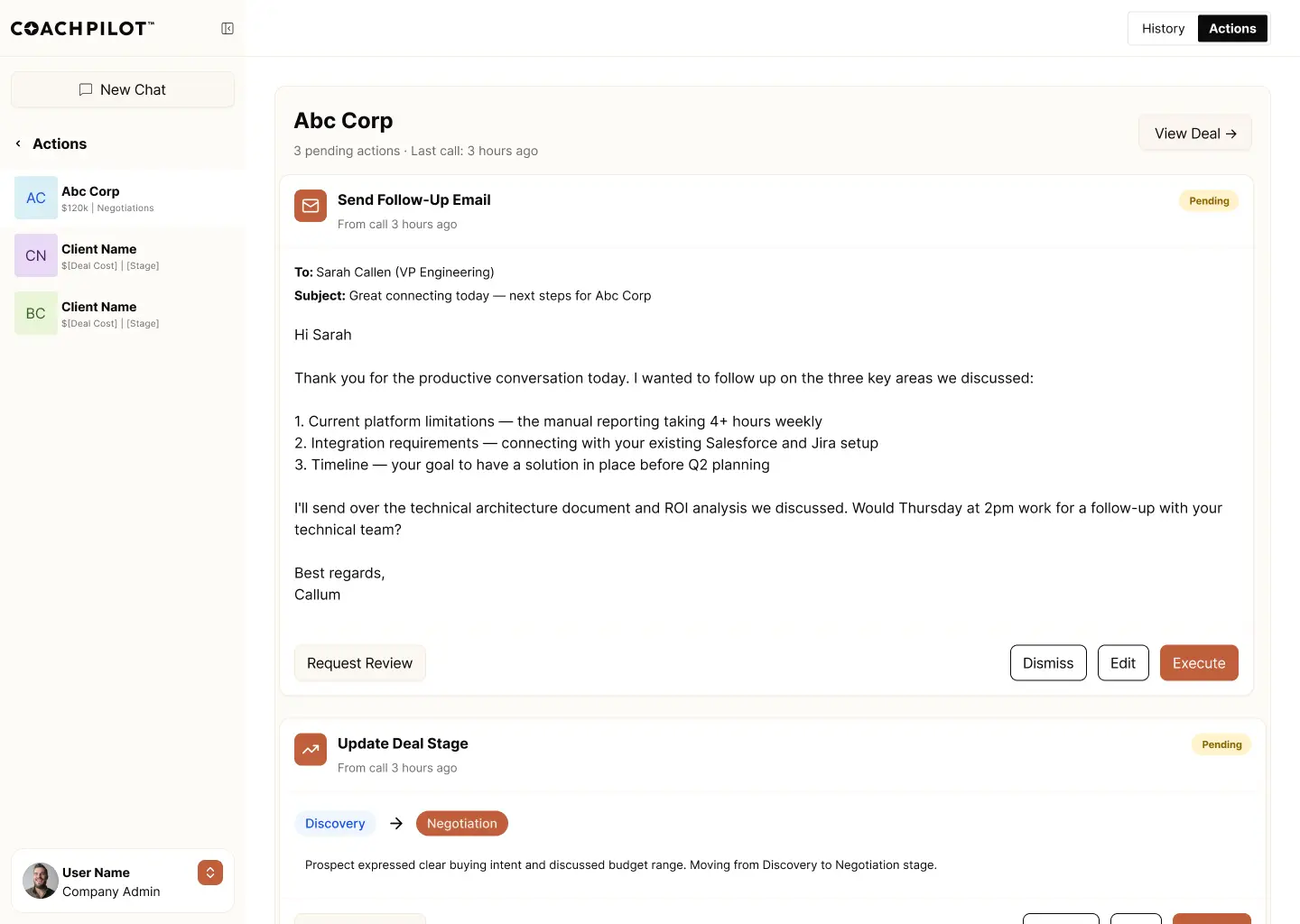
The platform serves three distinct paying user types, each with different responsibilities, different data access, and different decision-making needs. Each role receives a scoped interface — reducing noise, protecting data, and ensuring every user sees exactly what they need to perform their role effectively.
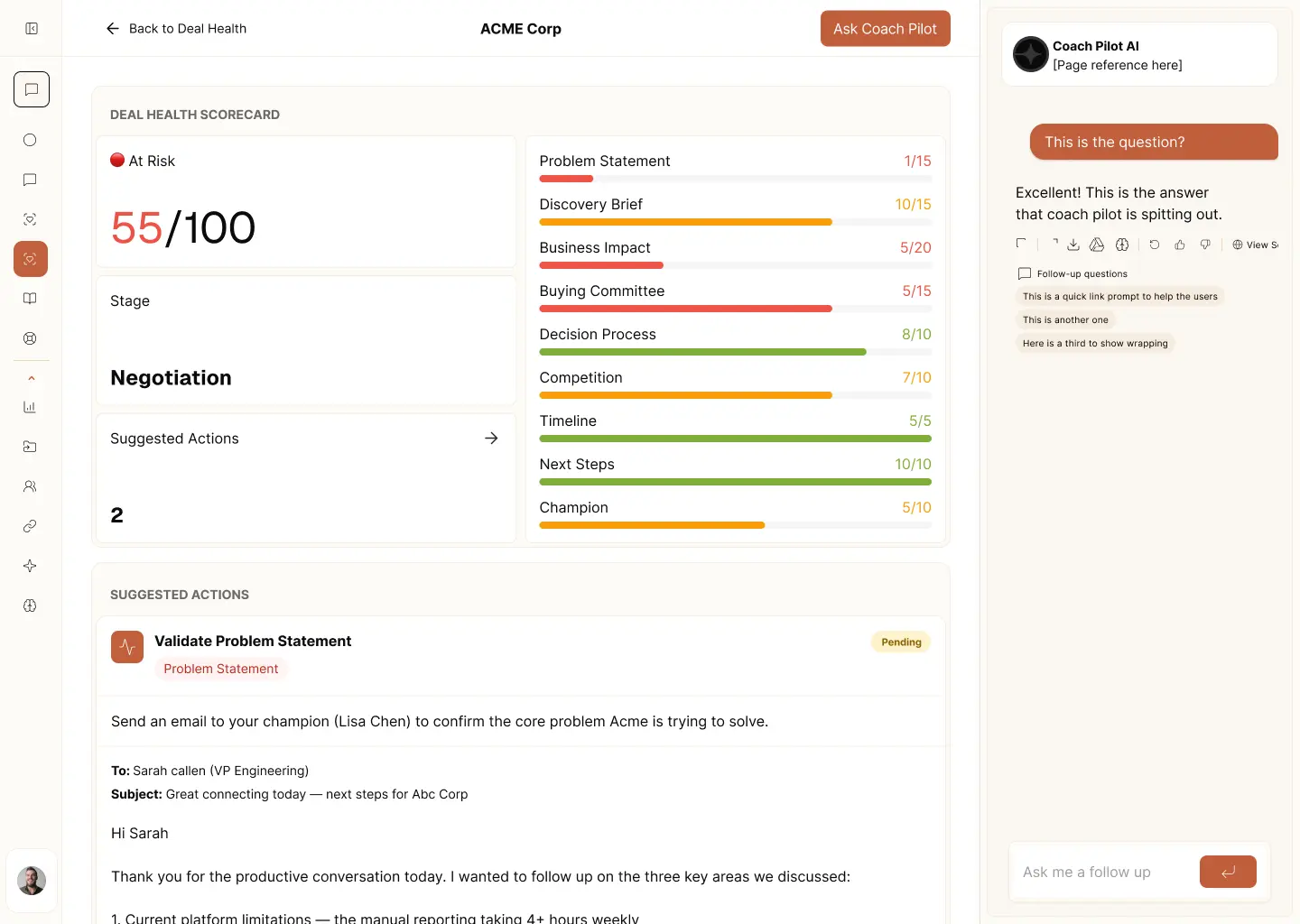
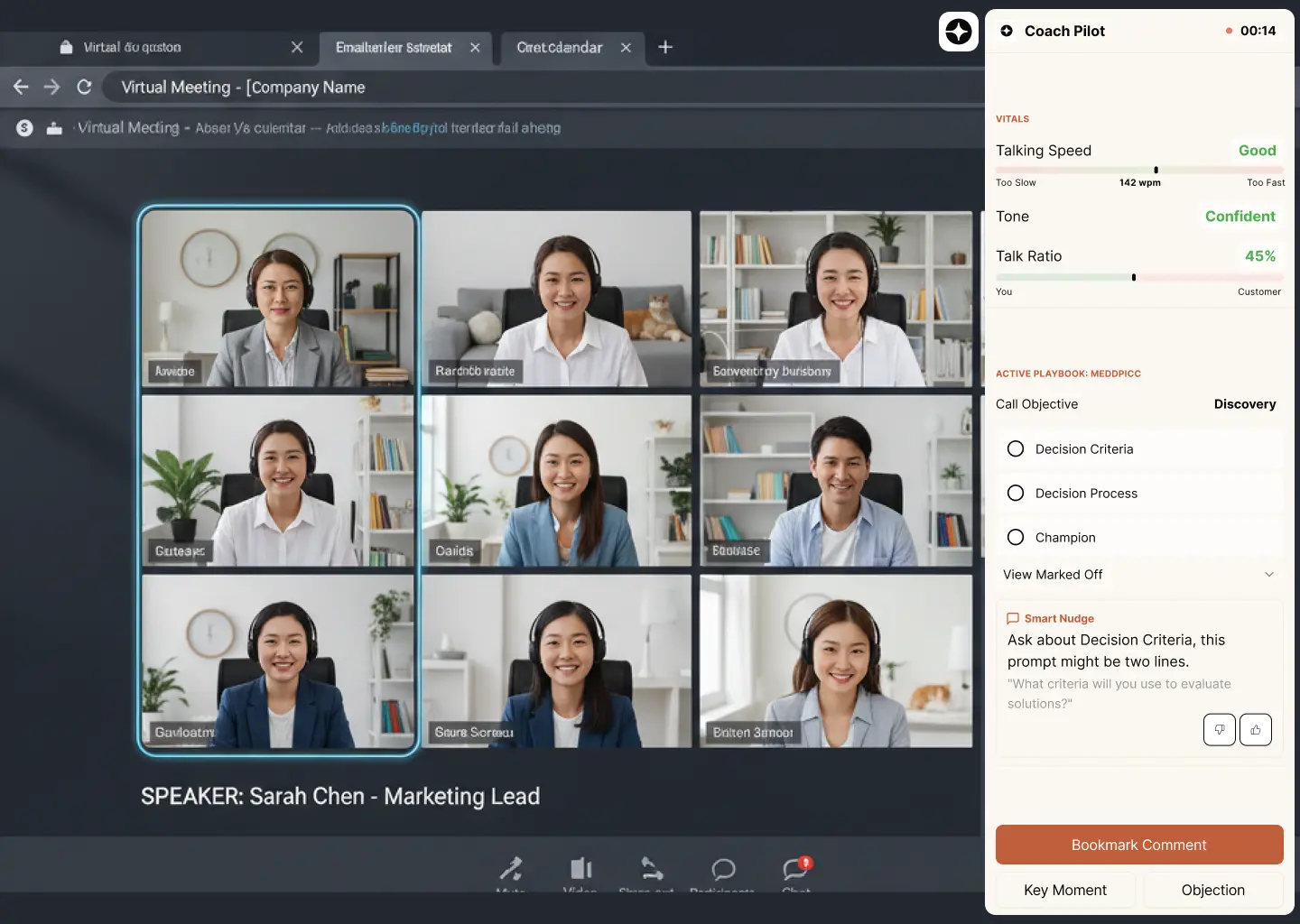
The invisible AI meeting coaching bot is the product's core differentiator. It joins live sales calls, walks sellers through their personalised playbooks in real time, surfaces objection responses, and guides deal progression as the conversation unfolds — without the buyer knowing it's there.
The design challenge was making this feel effortless and confidence-building, not intrusive or distracting. The UI was deliberately lightened and decluttered to keep the seller's focus on the conversation, with the AI surfacing guidance contextually rather than demanding attention.
Joins sales calls invisibly. Surfaces the right playbook step, objection response, or deal guidance in real time as the conversation unfolds — without the buyer knowing it's there.
A direct coaching channel for sellers outside of calls — built around the seller's workflow, not around the technology. Fast, clear, and contextually aware.
Structured sales playbooks surfaced in real time. Sellers follow the flow that's been built for their deals and their client type, with objection handling built in at every step.
Every UI decision was tested against one question: does this serve the moment a seller is live on a call, or does it distract from it? The interface recedes — the coaching comes forward.
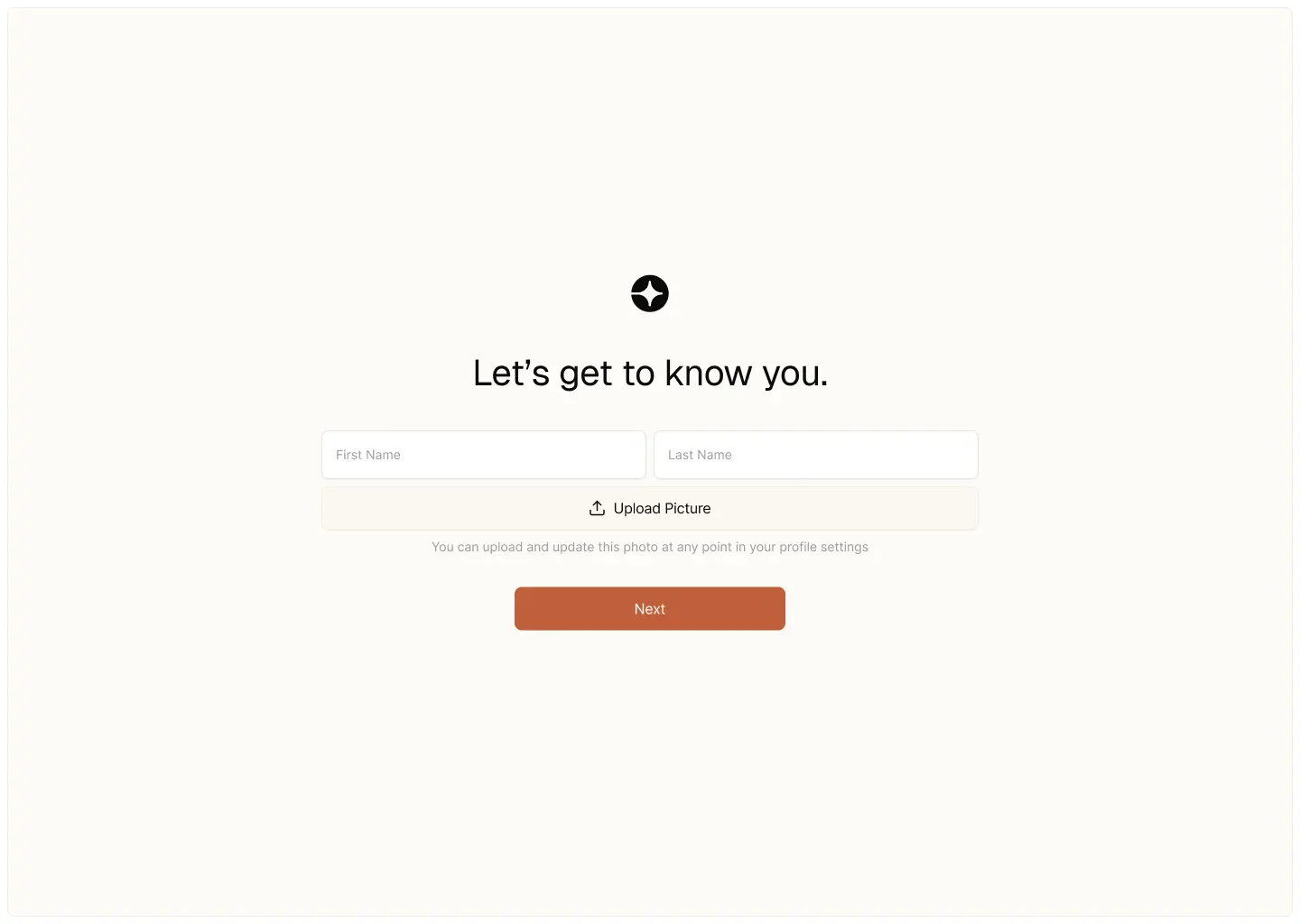
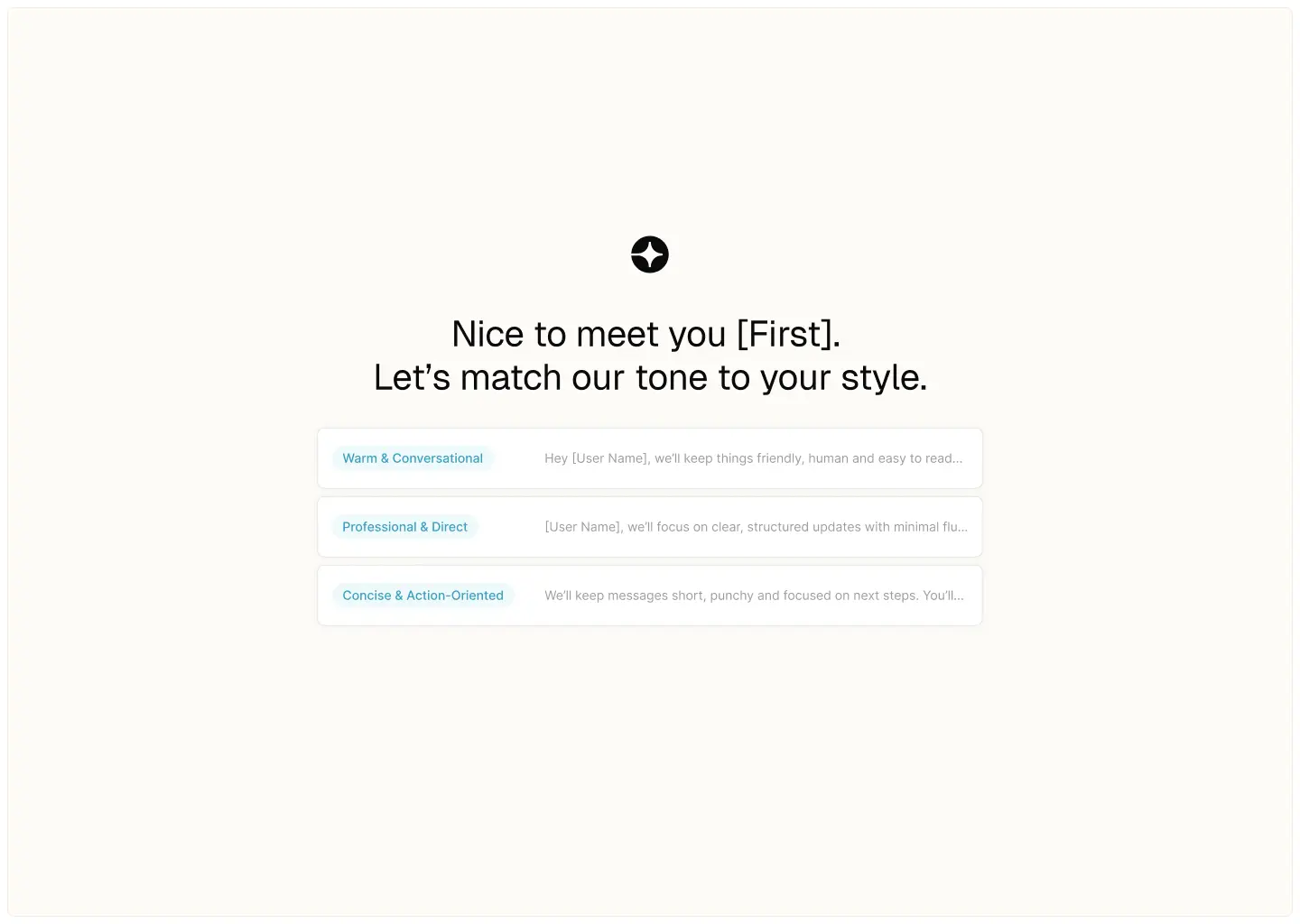
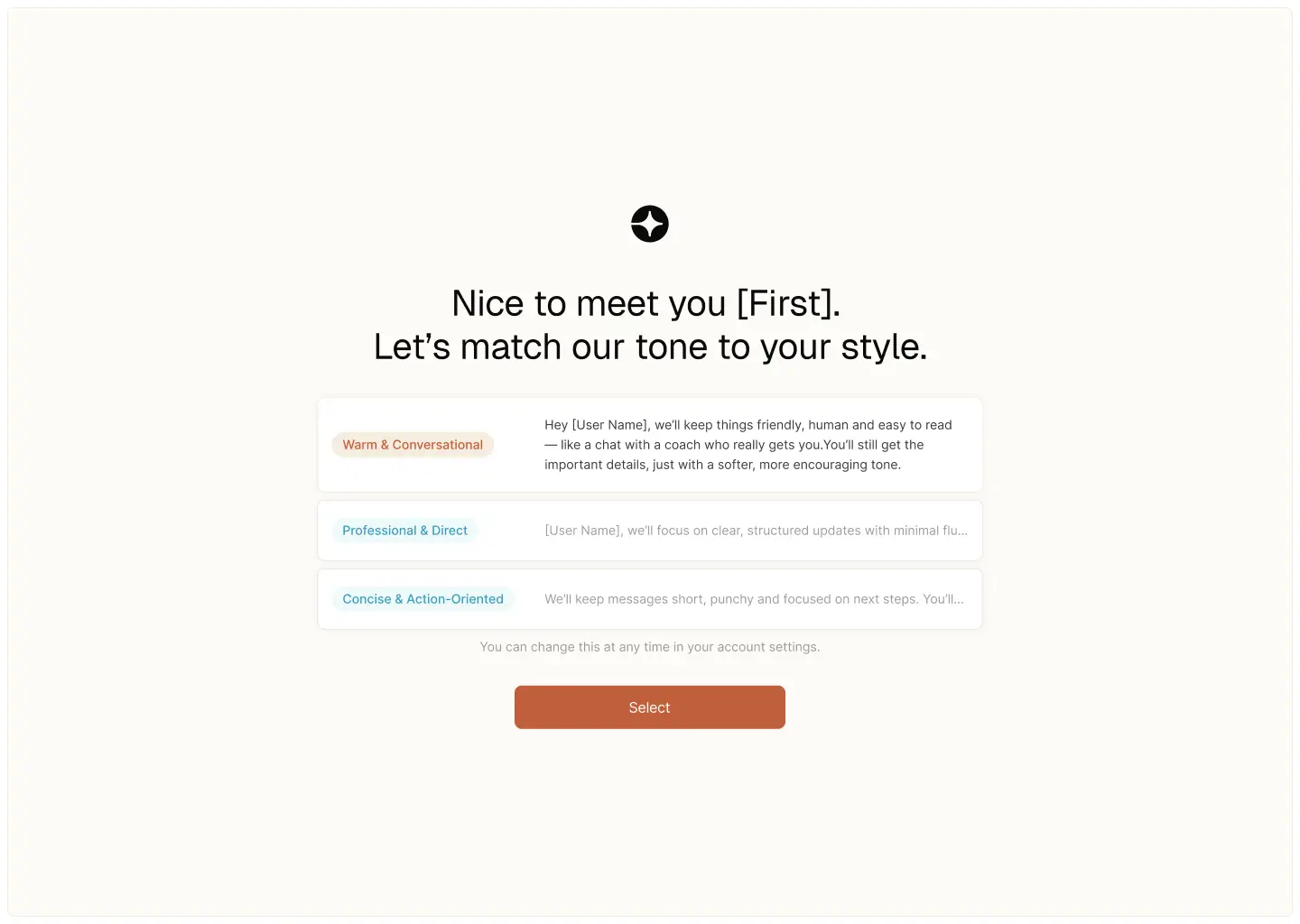
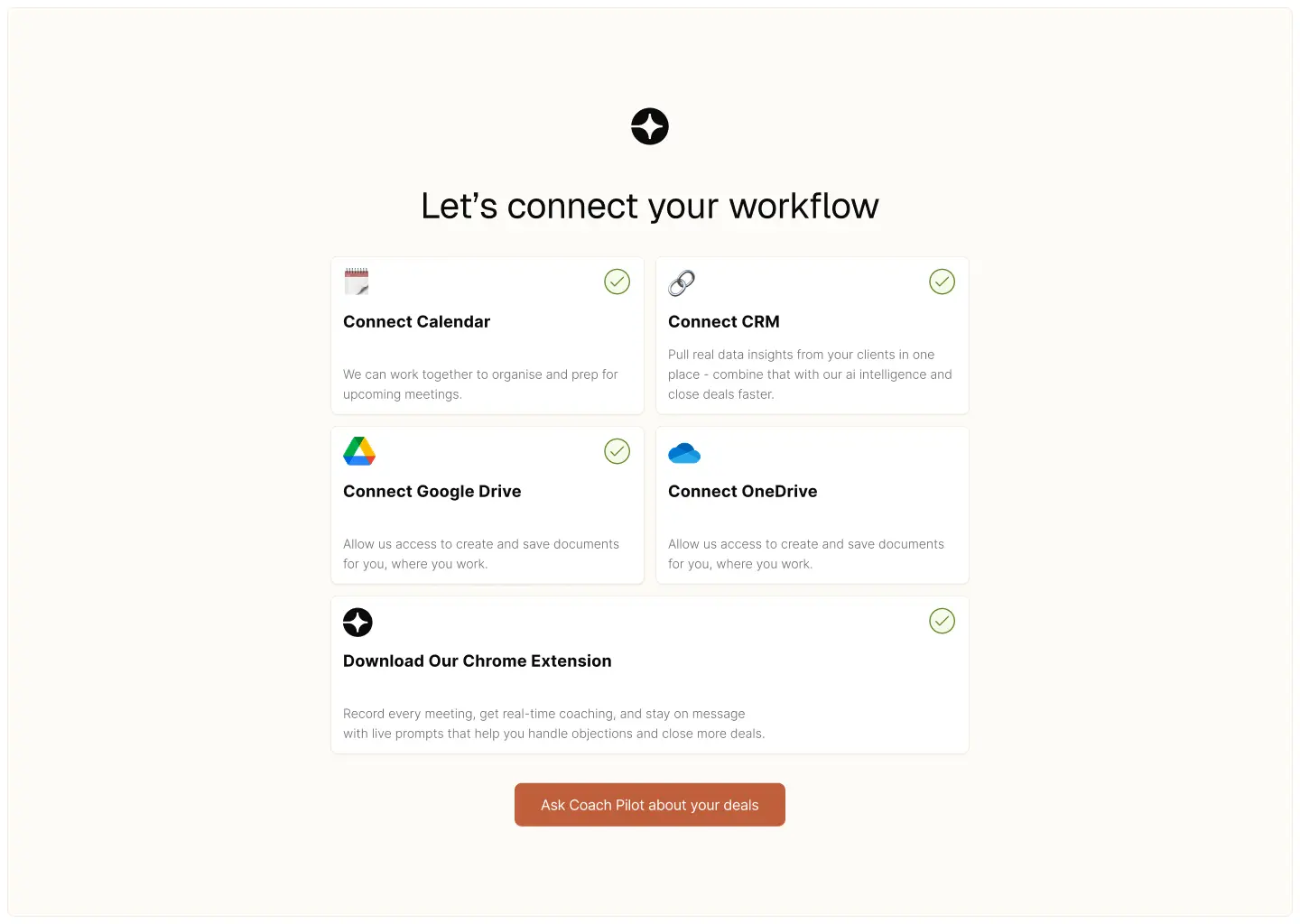
The onboarding redesign was built around a core principle: let users experience the AI before they've fully committed to learning the platform. The result is an onboarding experience that builds confidence, reduces early churn risk, and gets sellers to value faster.
Basic profile and role configuration — minimal friction, fast to complete.
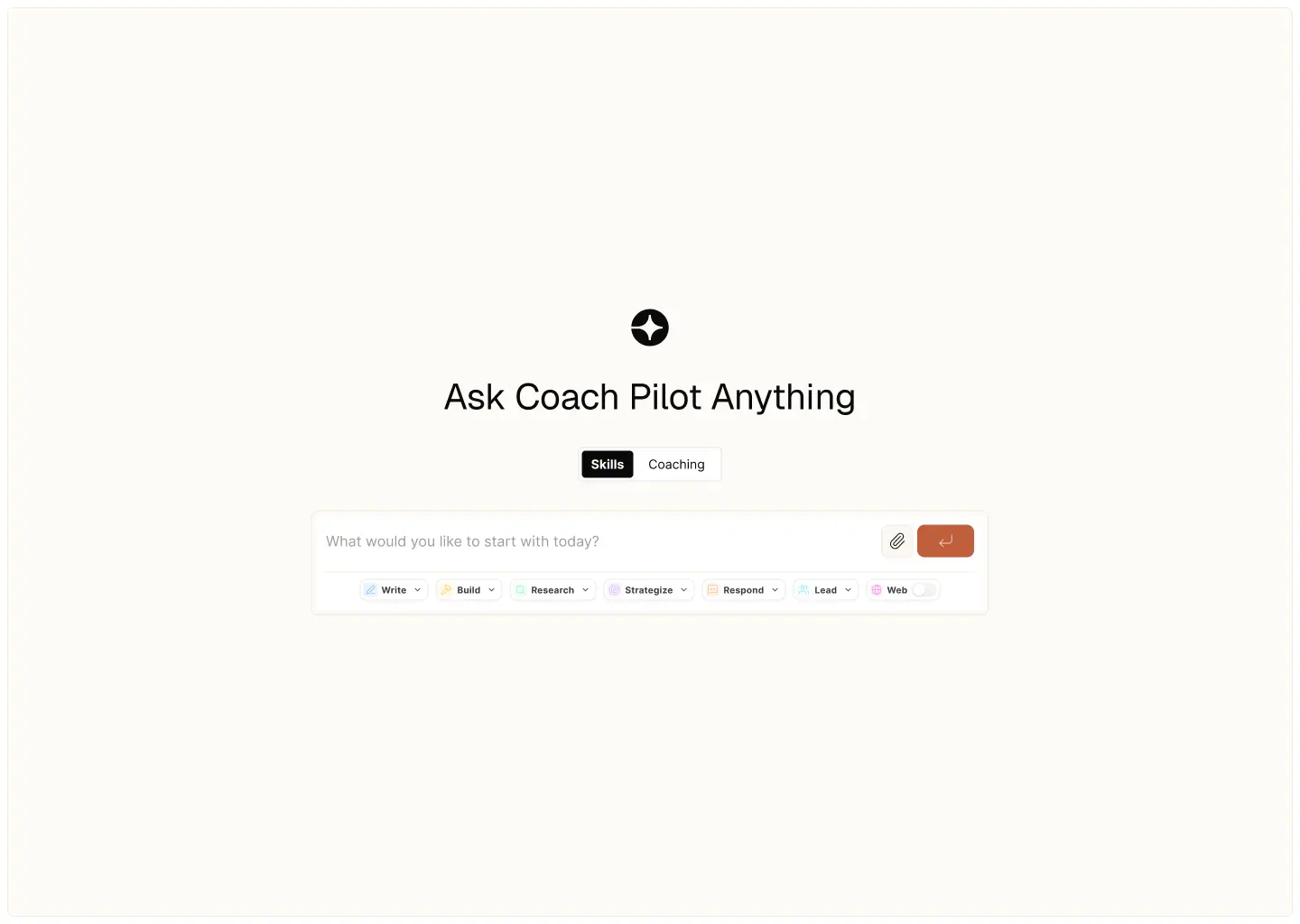
New users can try AI chat prompting immediately — before the platform tour, before the setup checklist. The value proposition lands in the first two minutes.
Users configure the tone and depth of how the AI communicates — more direct or more conversational, more detailed or more concise. A UX and product decision simultaneously: better AI output from day one, plus user ownership over the tool.
Guided tour of the scoped interface relevant to the user's role. They've already experienced the core value — now they learn how the rest of the platform supports it.
A deliberate decision was made to prioritise platform scalability over surface-level UI features. Dark and light mode — while a common user request — was deferred in favour of building the architectural and design system foundations required to support the next major roadmap item: automated playbook generation.
Coach Pilot's vision is to automate the creation of sales playbooks directly from a client's existing sales data and processes. The platform is now structurally ready to support this — with a design system and component library that can accommodate this feature without significant rework.
Giving each user type a tailored, scoped interface reduced complexity and increased relevance — a better experience for every role without building three separate products.
Giving Coach Pilot owners the ability to train the AI directly within the platform — ensuring the model improves continuously as the business expands, without relying on external tooling or engineering intervention.
This project is a strong example of product design when the client has traction, understands the challenge, and respects the team thinking needed to take it to the next level.
The most interesting design tension was between the AI as a feature and the AI as the product. Coach Pilot's value isn't in the dashboard or the reports — it's in the moment a seller is live on a call and the right prompt surfaces in real-time.
The new platform is pre-launch, and the project heavily relied on engineering for security best practice implementations. But the foundations — role clarity, AI-first UX, scalable architecture, and an onboarding experience that gets users to value fast — are all in place to scale the business.